
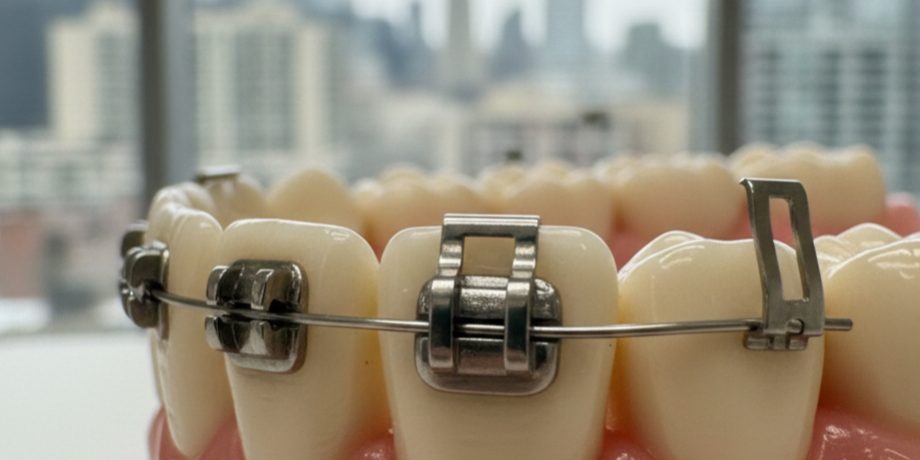
Curious about the engineering behind modern orthodontic systems? Understanding how do pitts 21 brackets stay closed reveals the sophisticated clip technology enabling efficient tooth movement. Many Toronto patients wonder about the mechanics that make self-ligating braces different from traditional systems. The question of how do pitts 21 brackets stay closed involves examining the integrated spring-loaded clip that secures archwires without external elastic bands.
This innovative design represents a fundamental departure from conventional bracket technology that has dominated orthodontics for decades. Learning how do pitts 21 brackets stay closed helps you appreciate why these systems deliver superior comfort, efficiency, and outcomes. The spring-loaded clip mechanism provides reliable wire retention while allowing friction-free movement essential for biological tooth positioning.
This comprehensive guide explores the engineering principles, mechanical operation, and clinical advantages of understanding how do pitts 21 brackets stay closed. Whether you’re researching treatment options or simply curious about orthodontic technology, knowing how do pitts 21 brackets stay closed provides valuable insight into modern dental care innovation.
Key Takeaways
- Understanding how do pitts 21 brackets stay closed involves a spring-loaded clip mechanism built into each bracket
- The integrated clip opens and closes to secure archwires without external ligatures or elastic bands
- Spring tension keeps the mechanism closed during treatment while allowing controlled opening during adjustments
- Learning how do pitts 21 brackets stay closed clarifies why self-ligating systems reduce friction dramatically
- The passive retention allows wires to move freely through bracket slots for efficient tooth movement
- Engineering precision ensures how do pitts 21 brackets stay closed reliably throughout 18-36 month treatments
- Toronto orthodontists value the technology for its durability and consistent clinical performance
Overview
The answer to how do pitts 21 brackets stay closed centers on an ingeniously simple yet sophisticated spring-loaded clip mechanism integrated into each bracket. Unlike traditional braces requiring external elastic bands or metal ties wrapped around brackets, pitts 21 brackets feature built-in clips that open and close to secure archwires. When orthodontists insert wires during adjustments, they open the clip mechanism using a specialized instrument. Once the wire is positioned in the bracket slot, the instrument releases the clip which springs closed under tension.
The spring force keeps the mechanism securely closed throughout treatment between appointments. Understanding how do pitts 21 brackets stay closed requires recognizing that the design balances two competing requirements—secure wire retention and friction-free movement. The passive clip holds wires gently rather than binding them tightly, allowing archwires to slide through brackets as teeth move.
This engineering achievement explains why self-ligating systems deliver faster treatment and enhanced comfort. Toronto orthodontists who understand how do pitts 21 brackets stay closed leverage this technology to provide efficient, predictable treatment with minimal patient discomfort.
Traditional Bracket Limitations
Before exploring how do pitts 21 brackets stay closed, examining traditional bracket limitations provides essential context. Conventional braces have used the same basic design for decades—brackets bonded to teeth with archwires held in place by external attachments.
Traditional systems rely on elastic ligatures or metal ties wrapped around each bracket to secure archwires. Orthodontists must manually place these external attachments at every adjustment appointment. The elastic bands particularly create problems—they degrade rapidly, losing elasticity within days of placement. As bands stretch and weaken, force levels fluctuate rather than remaining constant.
The binding created by external ligatures generates substantial friction between brackets and wires. Research demonstrates that traditional braces lose 40-60% of applied force overcoming this friction. When orthodontists apply pressure intending to move teeth, much of that force is consumed fighting resistance rather than achieving movement.
The external attachments also complicate oral hygiene. Elastic bands trap food particles in countless small spaces around brackets. These accumulations are extremely difficult to remove through normal brushing, increasing cavity risk during treatment. The rough surfaces created by protruding ligatures irritate cheeks and lips.
Understanding these limitations clarifies why the question of how do pitts 21 brackets stay closed represents such a significant innovation. Eliminating external attachments addresses fundamental problems that have plagued orthodontics for generations.
Spring-Loaded Clip Mechanism Explained
The core technology answering how do pitts 21 brackets stay closed involves a spring-loaded clip integrated directly into each bracket body. This mechanism functions as a miniature gate with internal spring tension maintaining closure throughout treatment.
The clip mechanism consists of several precisely engineered components working together. A small metal clip forms the closure system, pivoting on a hinge point built into the bracket structure. A spring located within the bracket body applies constant tension pulling the clip toward the closed position. This spring remains compressed when the clip is closed, constantly applying pressure to keep it secure.
Key mechanical components:
- Spring-loaded metal clip integrated into bracket body
- Pivot point allowing controlled opening and closing motion
- Internal spring providing consistent tension force
- Bracket slot precision-designed to accommodate archwires
- Smooth surfaces minimizing friction against wire
When orthodontists need to open brackets during adjustments, they use a specialized instrument that applies pressure overcoming spring tension. The clip pivots open on its hinge, creating an opening for wire insertion or removal. Once the instrument releases pressure, the spring immediately pulls the clip closed again with an audible click.
The spring force is carefully calibrated during manufacturing. Too weak and clips might open unintentionally during treatment. Too strong and opening clips during adjustments becomes difficult. Manufacturers engineer precise spring tension balancing these competing requirements. Understanding how do pitts 21 brackets stay closed includes appreciating this engineering refinement that ensures reliable function throughout months of continuous use.
Passive Self-Ligation Design
The question of how do pitts 21 brackets stay closed connects directly to passive self-ligation principles. While the clip mechanism keeps brackets closed, the way it holds wires differs fundamentally from traditional ligatures.
Traditional elastic bands bind wires tightly against bracket slots, creating a firm, inflexible connection. This tight binding generates the friction that inhibits tooth movement. The wire cannot slide freely through the bracket, requiring excessive force to achieve movement. The result is slower treatment and increased patient discomfort.
Pitts 21 clips hold wires gently rather than binding them rigidly. The clip closes to prevent wire escape but doesn’t compress the wire against the bracket slot with substantial force. This passive retention creates a loose connection allowing the wire to slide freely through the bracket as teeth move. The wire remains secure within the bracket but can glide smoothly when orthodontic forces are applied.
The space between the wire and bracket slot enables friction-free movement. As orthodontic forces move teeth, the wire glides through brackets following the path of least resistance. This biological approach respects natural tooth movement patterns rather than forcing rapid changes that can damage tissues.
The passive design explaining how do pitts 21 brackets stay closed while allowing wire movement represents the key innovation. Traditional thinking assumed that secure wire retention required tight binding. Self-ligating technology proves that gentle passive retention can be both secure and functional, creating a new paradigm in orthodontic treatment.
Material Engineering and Durability
Understanding how do pitts 21 brackets stay closed throughout lengthy treatments requires examining material engineering and durability. The clip mechanisms must function reliably through thousands of opening and closing cycles spanning 18-36 months without degrading or losing effectiveness.
High-grade stainless steel or specialized metal alloys form the bracket bodies and clip mechanisms. These materials resist corrosion in the moist oral environment while maintaining spring properties over time. The springs must provide consistent tension month after month despite temperature fluctuations, pH changes, and chemical exposure from foods and beverages.
Manufacturing precision ensures uniform performance across all brackets in a treatment set. Each clip mechanism is engineered to identical specifications so that every bracket in a patient’s mouth functions identically. This consistency is essential for predictable tooth movement patterns and treatment outcomes.
The durability of components determines how do pitts 21 brackets stay closed reliably without spontaneous failures. Inferior materials or imprecise manufacturing could result in clips opening unexpectedly or springs losing tension over time. Quality manufacturers invest in rigorous testing ensuring brackets perform consistently throughout treatment duration.
Toronto orthodontists appreciate that properly manufactured pitts 21 brackets rarely fail during treatment. The robust engineering means patients experience minimal emergency appointments for bracket problems. The reliability contributes significantly to treatment efficiency and patient satisfaction with the orthodontic experience.
How Orthodontists Open and Close Brackets
The practical mechanics of how do pitts 21 brackets stay closed and open during clinical use involves specialized instruments and techniques. Toronto orthodontists receive training on proper bracket manipulation ensuring safe, efficient adjustments during appointments.
Opening brackets requires a specialized instrument designed to apply precise pressure at specific points on the clip mechanism. The tool engages the clip and pushes against spring tension until the clip pivots open fully. Orthodontists then thread new archwires through the opened brackets systematically across the entire arch.
The opening process takes only seconds per bracket when performed by experienced practitioners. Orthodontists develop efficient techniques moving quickly through a full arch of brackets without fumbling or struggling. The speed and ease of opening pitts 21 brackets contribute to shorter appointment durations compared to traditional braces requiring ligature removal and replacement.
Closing brackets happens automatically when the opening instrument is withdrawn. The spring tension immediately pulls the clip closed with an audible click, securing the archwire in position. Orthodontists verify that each clip has closed completely before finishing the appointment. Visual and tactile inspection confirms proper closure across all brackets.
The simplicity explaining how do pitts 21 brackets stay closed during adjustments represents a clinical efficiency advantage. Traditional braces require removing all old elastic ligatures, cleaning brackets thoroughly, placing new wires, and applying fresh elastics—a time-consuming process taking 30-45 minutes. Self-ligating adjustments proceed much faster, typically completing in 15-20 minutes.
| Mechanism Feature | Pitts 21 Brackets | Traditional Braces |
| Wire Retention Method | Spring-loaded clip | External elastic/metal ligatures |
| Opening Method | Specialized instrument | Not applicable (ligatures removed) |
| Closing Method | Automatic spring closure | Manual ligature placement |
| Friction Level | Minimal (passive) | High (binding) |
| Adjustment Time | 15-20 minutes | 30-45 minutes |
| Wire Movement | Free sliding | Restricted by friction |
| Durability | Highly durable | Ligatures degrade rapidly |
| Failure Rate | Very low | Higher (broken ligatures) |
Clinical Advantages of the Closing Mechanism
Understanding how do pitts 21 brackets stay closed reveals multiple clinical advantages benefiting both patients and orthodontists. The technology addresses practical treatment challenges that have limited conventional approaches for decades.
Consistent force application throughout treatment cycles represents a major advantage. Traditional elastic ligatures lose tension within days, creating force fluctuations between appointments. The spring mechanism maintaining how do pitts 21 brackets stay closed never degrades or loses tension during the 8-10 week intervals between visits. Force levels remain constant from one adjustment to the next, promoting steady tooth movement.
The reliability of the closing mechanism reduces emergency appointments dramatically. Traditional braces experience frequent problems with broken or loose elastic ligatures requiring urgent repairs that disrupt schedules. The robust spring clips rarely fail, eliminating most emergency situations. Toronto patients appreciate the predictable, disruption-free treatment that results.
Wire retention security allows orthodontists to use lighter, more flexible archwires earlier in treatment. The clips hold even thin wires securely while traditional ligatures might allow wire escape. Earlier use of light wires promotes more comfortable tooth movement from the beginning of treatment, reducing patient discomfort.
The friction-free environment enabled by understanding how do pitts 21 brackets stay closed allows precise control over tooth positioning. Orthodontists can move individual teeth with greater accuracy because friction doesn’t interfere with applied forces. Treatment predictability improves substantially when mechanics function as intended without friction complications.
Patient Experience: What You Feel
From the patient perspective, how do pitts 21 brackets stay closed relates directly to daily comfort and treatment experience. The mechanical design creates noticeable differences in how braces feel compared to traditional systems throughout months of wear.
Patients don’t feel the clips opening or closing during adjustment appointments. The process happens so quickly with minimal manipulation that most people barely notice individual bracket work. The smooth, refined design means the closed clips don’t create rough surfaces or protruding elements that irritate soft tissues during daily activities.
The passive retention allowing wires to move freely translates into less pressure sensation during tooth movement. Traditional braces with tightly bound wires create more forceful sensations as teeth attempt to move against friction. The gentle sliding enabled by understanding how do pitts 21 brackets stay closed produces milder sensations that patients describe as pressure rather than pain.
Speaking and eating feel more natural with pitts 21 brackets because the streamlined profile minimizes tongue and lip interference. The smooth closed clips create less bulk inside the mouth compared to traditional brackets with protruding elastic ligatures that catch on tissues.
Toronto patients often comment that they forget they’re wearing braces during normal daily activities once the initial adjustment period passes. The comfort and minimal awareness result partly from the refined engineering explaining how do pitts 21 brackets stay closed without creating the problems associated with external attachments.
Safety and Reliability Throughout Treatment
The question of how do pitts 21 brackets stay closed necessarily includes safety considerations. Patients and orthodontists need confidence that brackets will function reliably without spontaneous failures that could compromise treatment or cause injury.
Clinical testing demonstrates that properly manufactured pitts 21 brackets maintain secure closure throughout treatment duration. The spring mechanisms are engineered to withstand normal oral forces including chewing, speaking, and tooth brushing. Spontaneous clip opening occurs extremely rarely with quality brackets from reputable manufacturers.
The passive design provides an additional safety feature. Even in the unlikely event that a clip opened unintentionally, the archwire would typically remain in the bracket slot due to other brackets maintaining wire position along the arch. Complete wire dislodgment requires multiple simultaneous bracket failures—a virtually impossible scenario.
Manufacturers conduct extensive durability testing simulating years of function in accelerated timeframes. Brackets undergo thousands of opening and closing cycles, exposure to oral temperature and pH conditions, and mechanical stress testing that exceeds normal use. Only products passing rigorous standards reach clinical use.
Toronto orthodontists trust pitts 21 brackets based on years of successful clinical experience with thousands of patients. The reliable performance explaining how do pitts 21 brackets stay closed contributes to confident treatment planning and patient satisfaction throughout the orthodontic journey.
Maintenance and Longevity
Understanding how do pitts 21 brackets stay closed includes recognizing that the mechanism requires no patient maintenance or intervention. Unlike traditional braces where patients must avoid certain activities that might dislodge elastic ligatures, self-ligating brackets are essentially maintenance-free from the patient perspective.
The clip mechanisms function automatically without patient intervention. You cannot and should not attempt to open or close brackets yourself. The specialized instruments used by orthodontists apply precise pressure at specific points that patients cannot replicate safely with household items.
Normal oral hygiene activities don’t affect how do pitts 21 brackets stay closed. Brushing and flossing around brackets should be thorough but doesn’t risk opening clips or compromising their function. The robust design withstands normal cleaning forces easily without damage.
Dietary precautions remain important primarily to prevent bracket debonding from teeth rather than clip mechanism damage. Hard, sticky, or crunchy foods can pull brackets off tooth surfaces regardless of bracket type. Following dietary guidelines protects your investment and prevents treatment delays from rebonding appointments.
The longevity of properly bonded pitts 21 brackets typically extends throughout the entire treatment period without requiring replacement. The durable engineering ensures that how do pitts 21 brackets stay closed remains reliable from initial placement through final removal at treatment completion.
Comparing Self-Ligating Bracket Technologies
When evaluating how do pitts 21 brackets stay closed compared to other self-ligating systems, several design variations exist among manufacturers. Understanding these differences helps appreciate engineering diversity in orthodontic innovation.
Other systems employ different clip configurations or rotation mechanisms. The diversity in mechanical approaches demonstrates multiple engineering solutions to the same problem—securing wires without external ligatures while minimizing friction for efficient tooth movement.
Traditional brackets represent the baseline comparison where the answer to how they stay closed involves external attachments rather than integrated mechanisms. The fundamental design difference explains why self-ligating systems deliver superior performance across multiple parameters.
Active self-ligating brackets that clamp wires more firmly differ from passive systems like pitts 21. These active designs prioritize firmer wire retention over friction reduction. Understanding how do pitts 21 brackets stay closed in passive mode highlights the biological approach prioritizing gentle forces and natural tooth movement.
For detailed consultation about how do pitts 21 brackets stay closed and function during your treatment, Tropical Orthodontics provides comprehensive orthodontic care in Toronto. Located at 265 Enfield Place, Suite 100B, Mississauga, Ontario, Canada, L5B 3Y7, Tropical Orthodontics serves patients throughout the Greater Toronto Area.
Contact the office at (905) 281-8200 to schedule your consultation with experienced orthodontists who specialize in self-ligating technology. The team explains how do pitts 21 brackets stay closed using visual demonstrations and models helping you understand the technology behind your treatment. Each patient receives expert care utilizing advanced bracket systems delivering efficient, comfortable orthodontic treatment.
Frequently Asked Questions
Q: How do pitts 21 brackets stay closed during eating and brushing? A: The spring-loaded clip mechanism maintains secure closure through normal oral activities. The robust engineering withstands chewing forces, brushing, and flossing without opening unintentionally.
Q: Can pitts 21 bracket clips open accidentally during treatment? A: Accidental opening is extremely rare with properly manufactured brackets. The spring tension is precisely calibrated to remain secure during all normal activities throughout treatment duration.
Q: How long do the spring mechanisms last? A: The springs are engineered to maintain consistent tension throughout typical 18-36 month treatments. Material degradation or spring failure occurs very rarely with quality brackets.
Q: How do orthodontists know if clips are properly closed? A: Visual and tactile inspection confirms closure. The clips produce an audible click and visible position change when properly closed after wire insertion.
Q: What happens if a bracket clip breaks during treatment? A: While rare, broken clips require bracket replacement. Your orthodontist can bond a new bracket and resume treatment with minimal delay or impact on results.
Conclusion
Understanding how do pitts 21 brackets stay closed reveals sophisticated clip engineering that has transformed orthodontic treatment efficiency and comfort. The spring-loaded clip mechanism integrated into each bracket provides secure wire retention while enabling the friction-free movement essential for efficient tooth positioning.
The passive self-ligation design balances competing requirements—holding wires securely yet allowing them to slide freely as teeth move into proper positions. This innovation addresses fundamental limitations in traditional braces that have constrained orthodontics for decades. Toronto patients benefit from the reliability, comfort, and efficiency that result from understanding how do pitts 21 brackets stay closed throughout treatment.
The durable materials and precise manufacturing ensure consistent performance across 18-36 month treatment durations without degradation. Ready to experience the advantages of advanced bracket technology? Contact Tropical Orthodontics today to schedule your consultation and discover how do pitts 21 brackets stay closed while delivering superior orthodontic outcomes.nology? Contact Tropical Orthodontics today to schedule your consultation and discover how do pitts 21 brackets stay closed while delivering superior orthodontic outcomes.