
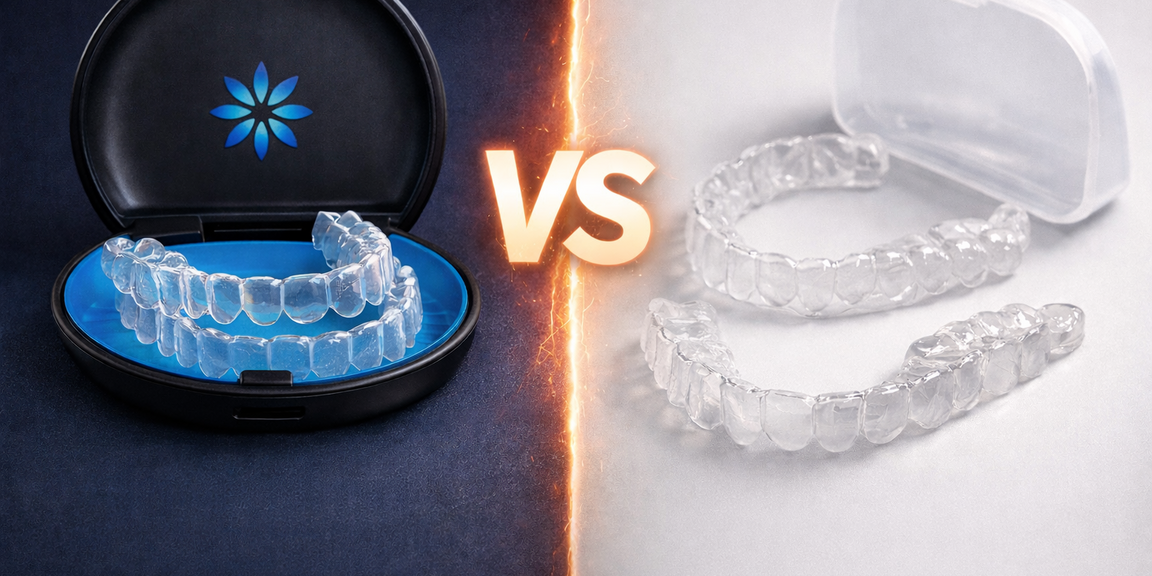
Clear aligners have become one of the most widely chosen orthodontic treatments in recent years. Their appeal is easy to understand. They are discreet, removable, and designed to fit into everyday life without the visibility or restrictions of traditional braces.
However, as more options enter the market, many patients find themselves asking a more specific question: is there a real difference between Invisalign and other clear aligners, or are they essentially the same?
For those considering teeth alignment without surgery aligners often represent a modern, non-invasive starting point.
They are also frequently evaluated alongside solutions designed to straighten teeth without removing teeth as part of a broader move towards more conservative orthodontic care.
Understanding the Terminology
The confusion often starts with how the terms are used.
- Clear aligners refer to the general category of treatment
- Invisalign is a specific brand within that category
This is similar to how people use brand names interchangeably with product types. While all Invisalign systems are clear aligners, not all clear aligners are Invisalign.
That distinction becomes important when comparing technology, results, and suitability.
How Clear Aligners Work
Clear aligners use a series of custom-made trays that gradually shift teeth into position. Each set is worn for a specific period before moving on to the next stage.
The process typically involves:
- Digital scanning of teeth
- Treatment planning using software
- Sequential aligner changes over time
As outlined in clear aligners overview on Wikipedia this staged movement allows for controlled and predictable alignment when treatment is followed correctly.
What Makes Invisalign Different?
Invisalign stands out primarily because of its long-standing presence and continuous investment in technology. Over time, it has developed a highly refined system that focuses on precision and predictability.
Advanced Treatment Planning
Invisalign uses detailed digital simulations to map out each stage of tooth movement. This allows patients to see a projected outcome before treatment begins.
Material and Design
The aligners are made from proprietary materials designed to apply consistent force while maintaining comfort.
Clinical Experience
Because Invisalign has been widely used for years, it has a large body of clinical data supporting its effectiveness across different case types.
Where Other Clear Aligners Differ
Not all aligner systems are built the same. While many follow a similar concept, differences can arise in:
- Treatment planning technology
- Level of customisation
- Scope of cases they can handle
- Monitoring and adjustments
Some aligners are designed primarily for simpler cases, while others aim to compete with more advanced systems.
Key Factors to Consider When Choosing
1. Complexity of Your Case
For mild to moderate alignment issues, many aligner systems can deliver similar results. However, more complex cases may benefit from systems with advanced planning and control.
2. Level of Customisation
Highly customised treatment plans can improve precision, especially when multiple teeth movements are involved.
3. Monitoring and Support
Orthodontic supervision plays a critical role. Regular monitoring ensures that treatment stays on track and adjustments can be made if needed.
4. Cost vs Value
While some aligners may appear more affordable, value should be assessed based on overall effectiveness, predictability, and long-term results.
Are Results Actually Different?
For straightforward cases, results between Invisalign and other aligners can be comparable. The differences tend to become more noticeable in:
- Complex alignment cases
- Bite correction
- Treatment efficiency
In these situations, the quality of planning and execution becomes more important than the category itself.
Comfort and Daily Experience
One of the main reasons patients choose aligners is the experience they offer.
Both Invisalign and other aligners provide:
- Minimal visibility
- Removability for meals
- Easier oral hygiene
However, comfort can vary slightly depending on material and fit.
What Patients in Mississauga Are Choosing
In Mississauga and nearby Brampton, clear aligners have become a preferred option for patients who want flexibility without compromising results.
Many patients prioritise:
- Discreet treatment
- Predictable timelines
- Minimal lifestyle disruption
The choice between Invisalign and other aligners often depends on the balance between complexity, convenience, and cost.
When Aligners May Not Be the Best Option
While aligners are highly effective, they are not suitable for every situation.
Alternative treatments may be recommended for:
- Severe crowding
- Significant bite misalignment
- Cases requiring precise control of tooth movement
A proper assessment is essential to determine suitability.
The Role of Patient Discipline
One factor that often gets overlooked is patient responsibility. Because aligners are removable, success depends on consistent wear.
Patients who follow instructions carefully tend to see:
- Faster progress
- More predictable outcomes
- Better long-term results
Frequently Asked Questions
Is Invisalign more accurate than other aligners?
In some cases, yes, particularly for more complex treatments where precision is critical.
Are all clear aligners safe?
Most professionally supervised aligner systems are safe. The key is proper planning and monitoring.
Can aligners replace braces completely?
Not entirely. Some complex cases may still require alternative treatments.
How long does aligner treatment usually take?
Typically between 6 to 18 months, depending on the case.
Final Thoughts
The difference between Invisalign and other clear aligners is not simply about branding. It comes down to technology, treatment planning, and suitability for your specific needs.
For many patients, both options can deliver excellent results. The most important decision is not choosing a brand, but choosing the right approach based on your individual case.
With modern orthodontics continuing to evolve, patients today have more flexibility than ever before. Understanding these differences allows you to make a more informed and confident choice.